The Cost of Conventional Weed Control
Weeds are among the most significant threats to agricultural yields, aggressively competing with commercial crops for water, sunlight, and soil nutrients. Historically, large-scale farming has managed this threat through broadcast spraying—covering entire fields with chemical herbicides. This method is increasingly problematic. Herbicide costs are volatile, chemical run-off impacts local ecosystems, and most alarmingly, weeds are rapidly developing chemical resistance.
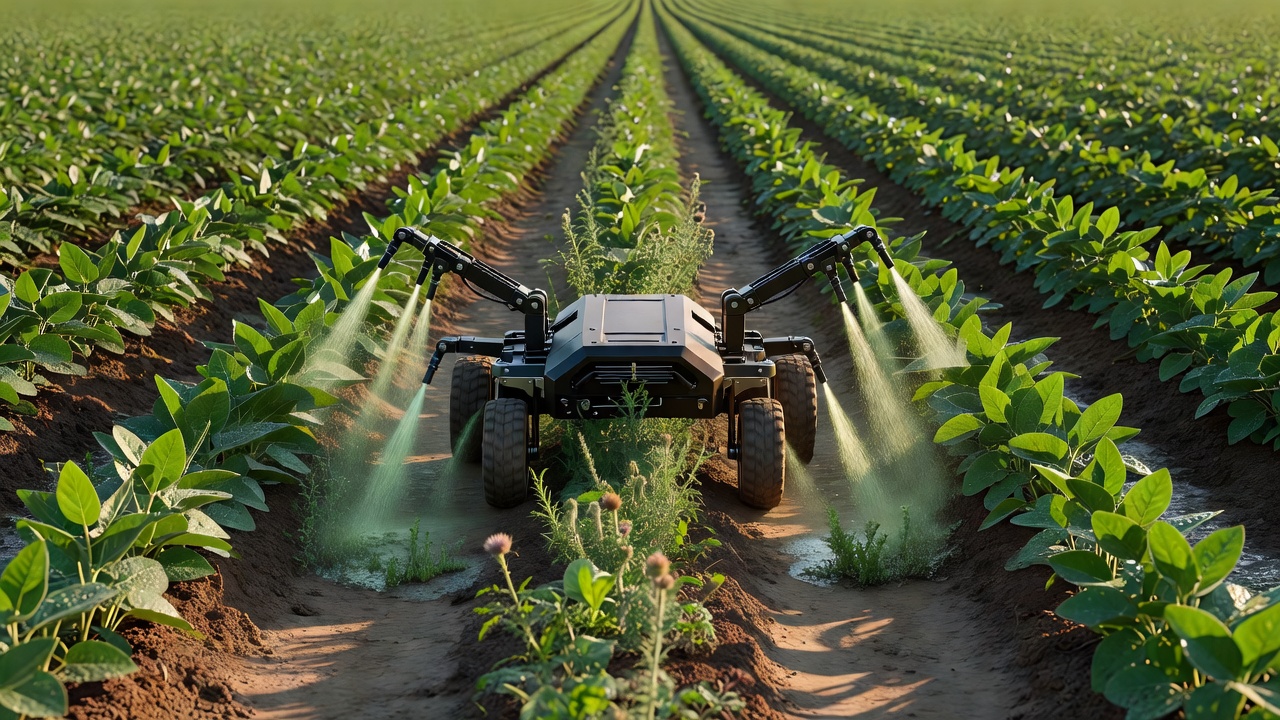
Robotic weeders present a technological paradigm shift. Instead of treating the field uniformly, these systems identify and eradicate individual weeds on a plant-by-plant basis. This transition from broadcast application to targeted precision has profound implications for agricultural economics and sustainability.
Vision Systems and Target Identification
The efficacy of a robotic weeder rests entirely on its ability to differentiate between the cash crop and the invasive weed. This is achieved through sophisticated computer vision arrays mounted close to the soil surface.
As the machine moves down the crop rows, cameras capture hundreds of frames per second. Onboard edge-computing processors run these images through deep learning models trained to recognize the specific morphological traits (leaf shape, color, stem structure) of both the crop and common weeds. Because processing speed is vital, these robots rely heavily on localized computing hardware rather than cloud connections, ensuring zero latency in the identification process.
Eradication Methodologies
Once a weed is identified, the robot must neutralize it. Different models utilize distinct mechanisms for eradication, largely dependent on the crop type and the farmer's operational philosophy.
- Micro-dosing Sprayers: Instead of spraying a wide area, tiny nozzles fire a highly concentrated dose of herbicide directly onto the leaves of the identified weed. This method can reduce overall chemical usage by up to 80% while achieving identical eradication rates.
- Mechanical Cultivation: Small, rapidly actuating blades or hoes deploy into the soil to sever the weed at its root system, completely eliminating the need for chemicals. This is particularly popular in certified organic farming where herbicides are banned.
- Laser Weeders: High-powered thermal lasers target the meristem (growth center) of the weed, instantly boiling the water inside the plant's cells and killing it through thermal shock. This method leaves the soil undisturbed and uses zero chemicals.
Environmental and Economic Impact
The reduction in chemical volume offers immediate financial benefits. Herbicides constitute a massive portion of seasonal operating expenses; reducing consumption by 80% rapidly offsets the capital cost of the robotic system.
Environmentally, the benefits are equally significant. Targeted application drastically reduces the volume of chemicals leaching into groundwater or running off into local river systems. Furthermore, non-chemical methods like mechanical hoeing and laser eradication completely circumvent the issue of herbicide-resistant superweeds, providing a long-term, sustainable solution to weed management.
Operational Integration
Deploying robotic weeders requires a shift in field preparation. For mechanical weeders to operate safely, crop rows must be planted with exact precision, usually utilizing GPS RTK guidance during the seeding phase. Any deviation in the row structure increases the risk of the robot misidentifying or accidentally damaging the crop.
Despite these integration requirements, robotic weeding is rapidly becoming one of the most widely adopted forms of agricultural robotics, driven by intense regulatory pressure to reduce chemical usage and the undeniable economic logic of micro-targeted applications.