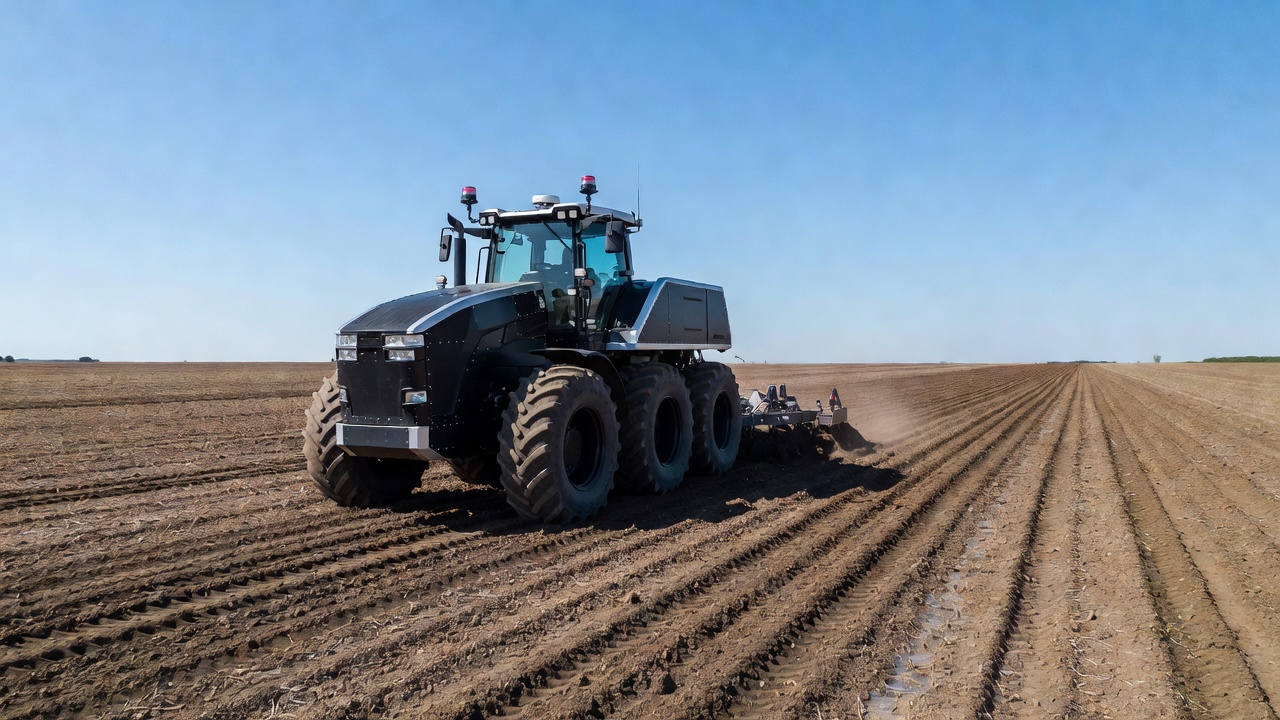
Introduction to Driverless Agriculture
The agricultural sector is currently undergoing a profound transformation characterized by the widespread adoption of autonomous heavy machinery. At the forefront of this shift is the autonomous tractor, a machine that operates without a human driver in the cab. Capable of tasks ranging from tillage and planting to crop spraying and harvesting assistance, driverless tractors address critical industry challenges, primarily chronic labor shortages and the pressing need for heightened operational efficiency.
By removing the operator from the immediate environment, farm managers can deploy fleets that work continuous hours during critical, weather-dependent planting and harvesting windows. This evolution is not a sudden leap but rather a progressive transition from early auto-steer systems to fully autonomous units functioning with high degrees of spatial awareness and obstacle avoidance.
Core Navigation and Sensing Technologies
The ability of a heavy machine to operate safely and precisely in variable outdoor environments relies on a fusion of complex sensor arrays and software algorithms.
- GPS RTK (Real-Time Kinematic): Provides sub-inch positioning accuracy, far exceeding standard GPS. This is essential for ensuring that implements follow exact rows without crushing crops or overlapping chemical applications.
- LiDAR (Light Detection and Ranging): Generates 3D topological maps of the immediate surroundings, enabling the tractor to detect ditches, fence lines, and unexpected obstacles like animals or human workers.
- Computer Vision: High-definition camera arrays coupled with machine learning models interpret visual data in real-time, allowing the machine to distinguish between a crop row and a weed patch, or to identify blockages in the implement being towed.
- Telemetry and IoT Integration: Tractors remain in constant communication with central farm management systems, reporting fuel levels, engine diagnostics, and task progress via cellular or private network connections.
Operational Efficiency and Labor
The immediate advantage of autonomous tractors lies in their capacity for continuous operation. Unlike human operators who require breaks, rest, and are subject to fatigue-induced errors, autonomous units can work 24/7 provided they have fuel or battery charge. This capability is paramount during tight seasonal windows where a sudden shift in weather can dictate the success or failure of a crop cycle.
Furthermore, these systems allow a single farm manager to oversee a fleet of machines simultaneously from a central control room or mobile device, shifting the human role from manual labor to supervisory management. This multiplication of human effort is a key driver in the economic rationale behind adopting such systems.
Implementation and Infrastructure Requirements
Adopting autonomous tractors is not as simple as purchasing new equipment. Farms must possess or invest in robust digital infrastructure to support these machines. High-speed, low-latency connectivity—often requiring the installation of private LTE or rural 5G networks—is necessary to handle the vast amounts of telemetry data being transmitted.
Additionally, fields must be extensively mapped. Digital boundaries, precise geofencing, and topographic mapping must be completed before an autonomous tractor can safely execute a task. The farm's operational workflow must also be digitized, requiring staff training in software management and data analysis.
Economic Considerations and ROI
The capital expenditure required for fully autonomous tractors or retrofit kits for existing machinery is substantial. However, the return on investment (ROI) calculation is typically based on several compounding factors over a 5 to 7-year timeline.
| Cost Factor | Impact of Automation |
|---|---|
| Labor Costs | Significant reduction; specialized operators replaced by fewer fleet supervisors. |
| Input Overlap | Reduced by up to 10% due to sub-inch precision in planting and spraying. |
| Equipment Utilization | Increased utilization rates as machines operate outside standard daylight working hours. |
| Fuel Efficiency | Optimized pathing and consistent engine load lead to measurable fuel savings. |
The Future of Tractor Automation
As the technology matures, we anticipate a divergence in equipment size. While major equipment manufacturers continue to automate massive 400-horsepower machines, a parallel trend is emerging toward smaller, swarm-based autonomous units. These lighter machines reduce soil compaction—a persistent issue in modern farming—and offer redundancy, as the failure of one small unit does not halt the entire operation.
Ultimately, the autonomous tractor is the foundational node in a broader, fully connected agricultural ecosystem. Its continued development will dictate the pace at which farming transitions into a fully digitized, data-driven industry.