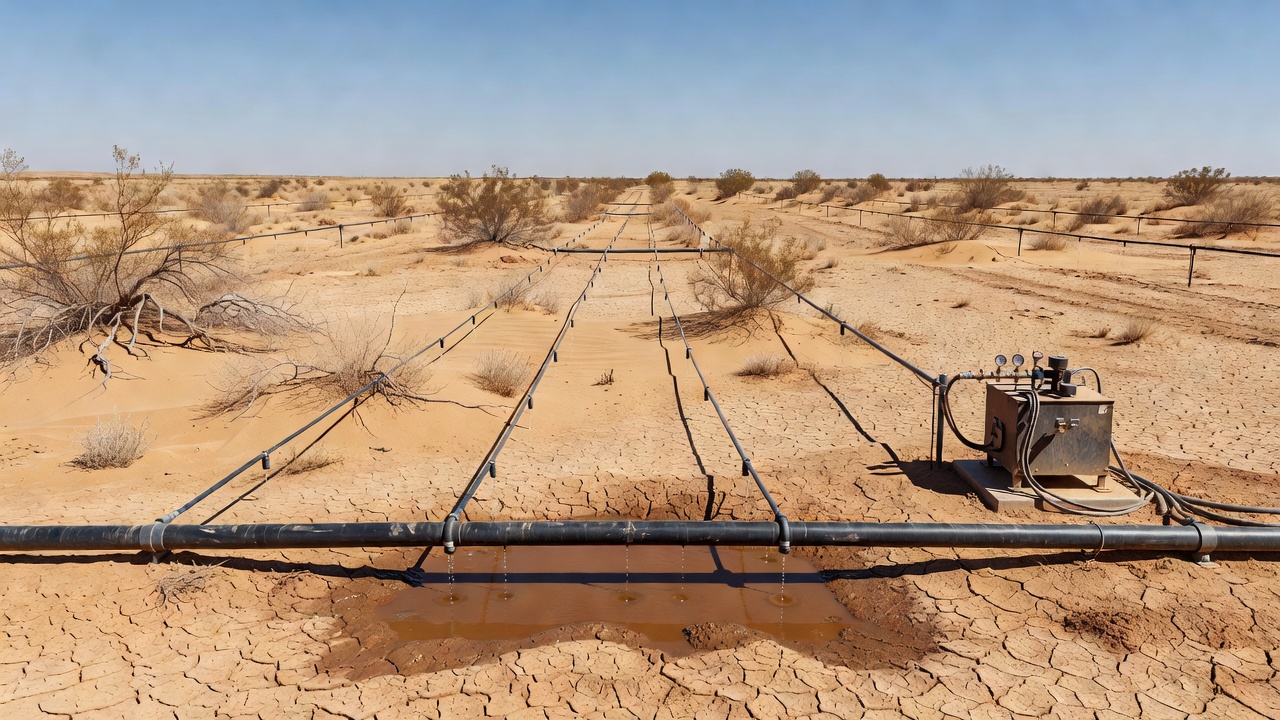
The Critical Nature of Water Conservation
Agriculture accounts for roughly 70% of global freshwater withdrawals. As climate volatility increases and underground aquifers face unprecedented depletion rates, water conservation is no longer an environmental ideal—it is a strict economic necessity. Traditional irrigation methods, such as flood irrigation or untargeted overhead sprinklers, are highly inefficient, resulting in massive evaporative loss and uneven water distribution.
Automated irrigation systems replace guesswork with data. By networking soil moisture sensors, weather forecasting APIs, and electronically actuated valves, these systems deliver exact water quantities to specific crop zones only when biologically necessary.
Sensor Networks and Data Aggregation
The foundation of automated irrigation is the localized sensor network. Probes are driven into the soil at varying depths across the field to measure volumetric water content, soil temperature, and salinity.
These sensors communicate wirelessly—often via low-power wide-area networks like LoRaWAN—to a central controller. Instead of watering on a fixed timer (e.g., every Tuesday for an hour), the controller analyzes the real-time soil moisture data. If the deep root zone contains sufficient moisture despite dry surface soil, the system prevents watering, saving thousands of gallons.
Variable Rate Application
Fields are rarely uniform. Variations in soil type, topography, and drainage mean that one section of a field may be parched while another remains waterlogged. Automated systems segment fields into micro-zones.
- Smart Center Pivots: Traditional center pivot sprinklers can be retrofitted with variable rate irrigation (VRI) panels. As the pivot rotates, individual nozzles speed up, slow down, or shut off completely to match the specific moisture requirements of the ground immediately beneath them.
- Drip Irrigation: In subsurface or surface drip systems, automated manifolds control the flow of water and suspended nutrients (fertigation) directly to the root zone, virtually eliminating evaporative loss.
Predictive Weather Integration
Modern controllers do not just react to current soil conditions; they anticipate future needs. By integrating with localized weather station data and predictive AI modeling, the system adjusts schedules dynamically.
For example, if the soil moisture drops below the threshold, but the system's API forecasts a high probability of significant rainfall within the next 12 hours, the controller will delay irrigation. This predictive capability prevents over-saturation, protects root health, and maximizes the use of free, natural precipitation.
Economic and Environmental ROI
The return on investment for automated irrigation is highly tangible. Farms typically see a 20% to 40% reduction in overall water usage, directly decreasing utility and pumping costs. Furthermore, precise water management limits nutrient leaching—ensuring expensive fertilizers remain in the root zone rather than washing into the water table.
Beyond water savings, plants grown in optimal, consistent moisture conditions exhibit less stress, resulting in higher overall yields and more uniform crop quality at harvest. As global water restrictions tighten, these automated systems provide the resilience necessary to maintain agricultural output in an increasingly arid world.